+ View All Full Mortised Models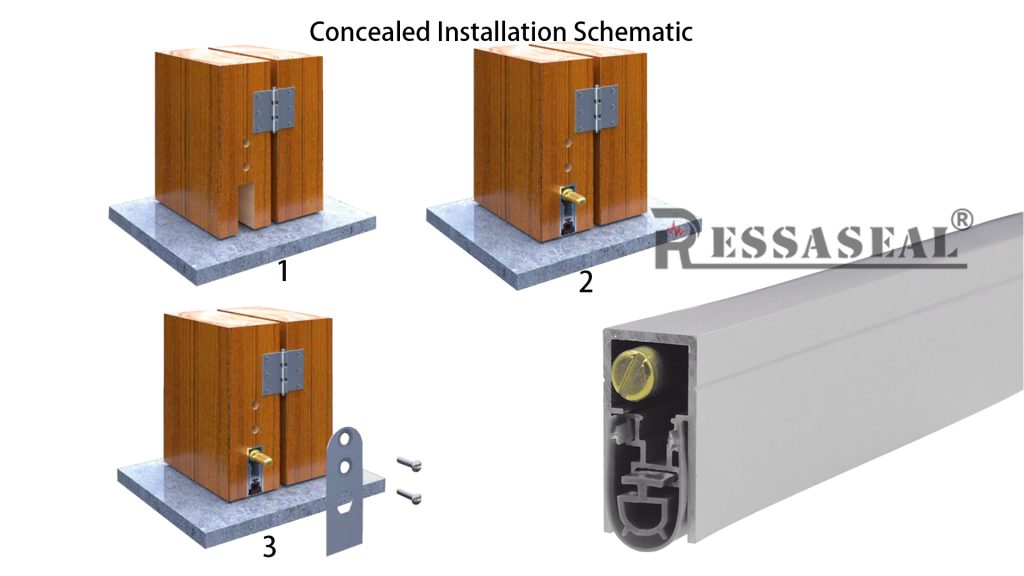
In a bustling office environment, privacy and safety are paramount. Whether it’s keeping a confidential meeting private or meeting strict fire safety codes, the gap at the bottom of your door is your weakest link.
Enter the Automatic Drop-Down Bottom Seal. But when it comes to an office renovation, you face a critical choice: Surface-Mounted (Face-Fixed) or Mortised (Concealed)?
Choosing the wrong one could mean a ruined aesthetic or an expensive installation mistake. Let’s break down which one is the perfect fit for your workspace.
Mortised Seals (The Concealed Powerhouse)
A Mortised Automatic Drop-Down Seal is installed into a groove (mortise) cut into the bottom of the door leaf. When the door is closed, it’s completely invisible.
-
Pros:
-
Seamless Aesthetics: Since it’s hidden inside the door, it doesn’t interfere with the office’s interior design. Perfect for high-end executive suites.
-
Superior Durability: Being encased in the door protects the mechanism from kicks, carts, and vacuum cleaners.
-
Maximum Performance: Often provides the best acoustic (soundproofing) and fire protection ratings.
-
-
Cons:
-
Complex Installation: Requires the door to be removed and a channel to be professionally routed out.
-
Cost: Higher labor costs due to the precision required.
-
-
Best For: New office fit-outs or high-end renovations where the doors can be sent to a workshop.
Surface-Mounted Seals (The Retrofit Hero)
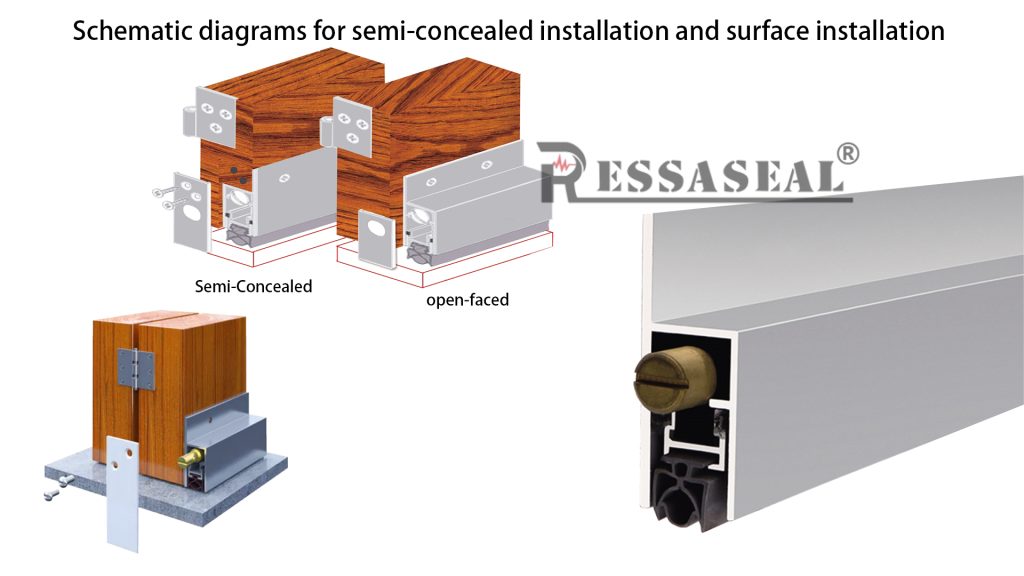
A Surface-Mounted Seal is fixed directly onto the face of the door (usually the pull-side) using a decorative aluminum housing.
-
Pros:
-
Easy Retrofit: No need to remove the door or carve into it. It can be installed in minutes while the door is on its hinges.
-
Cost-Effective: Significantly lower labor costs, making it ideal for large-scale office upgrades.
-
Versatility: Can be used on almost any existing door, including metal or glass-framed doors where routing isn’t an option.
-
-
Cons:
-
Visible Hardware: The aluminum casing is visible on the door face (though finishes like silver, black, or bronze can help it blend in).
-
Exposure: Because it sits on the outside, it’s more prone to accidental bumps in high-traffic hallways.
-
-
Best For: Active offices that need a quick upgrade without disrupting daily operations, or historical buildings where doors shouldn’t be altered.
Head-to-Head Comparison
| Feature | Mortised (Embedded) | Surface-Mounted (Face-Fixed) |
| Aesthetics | Invisible / Sleek | Visible (Industrial/Functional) |
| Ease of Install | Requires professional routing | DIY / Quick install |
| Acoustic Seal | Excellent (up to 44dB+) | Very Good |
| Fire Protection | Integral part of the door | Added secondary protection |
| Project Type | New Build / Deep Reno | Retrofit / Fast Upgrade |
The “Fire Protection Solution” Factor
Whether you choose embedded or surface-mounted, remember that the door bottom is only half the battle. To create a true Fire Protection Solution, your drop-down seal should always be paired with a high-quality Fireproof Intumescent Seal around the frame.
-
Pro Tip: In an office setting, look for “Acoustic + Smoke” rated seals. This ensures that while you are meeting fire codes, you are also creating a quiet, productive environment for your team.
Conclusion: Which should you choose?
-
Go Mortised if you are ordering new doors or doing a “down-to-the-studs” renovation where perfection and hidden hardware are the priorities.
-
Go Surface-Mounted if you have existing doors and need to solve a noise or smoke leakage problem today without the mess of sawdust and heavy machinery.
Unsure if your office doors can handle a mortised installation? Our team provides expert advice on the best Door Bottom Seals for commercial spaces. Send us a photo of your current doors, and we’ll help you choose the right Fire Protection Solution for your budget and style.